
WonderCon 2025 Interview: Ashley Maria of ‘Super Human Anxiety’
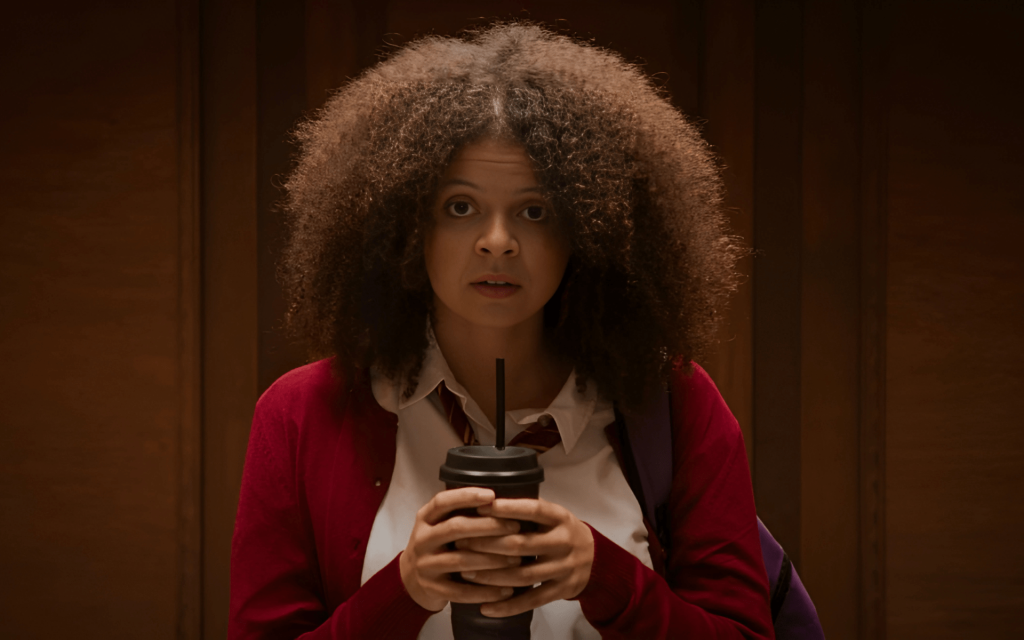
A young girl stands on an elevator, holding a plastic cup. The doors open, and there are a lot of her fellow students. Staring. When she asks if they are going up, they scoff and complain that they are now going to be late. The girl suddenly breaks the cup in her hand.
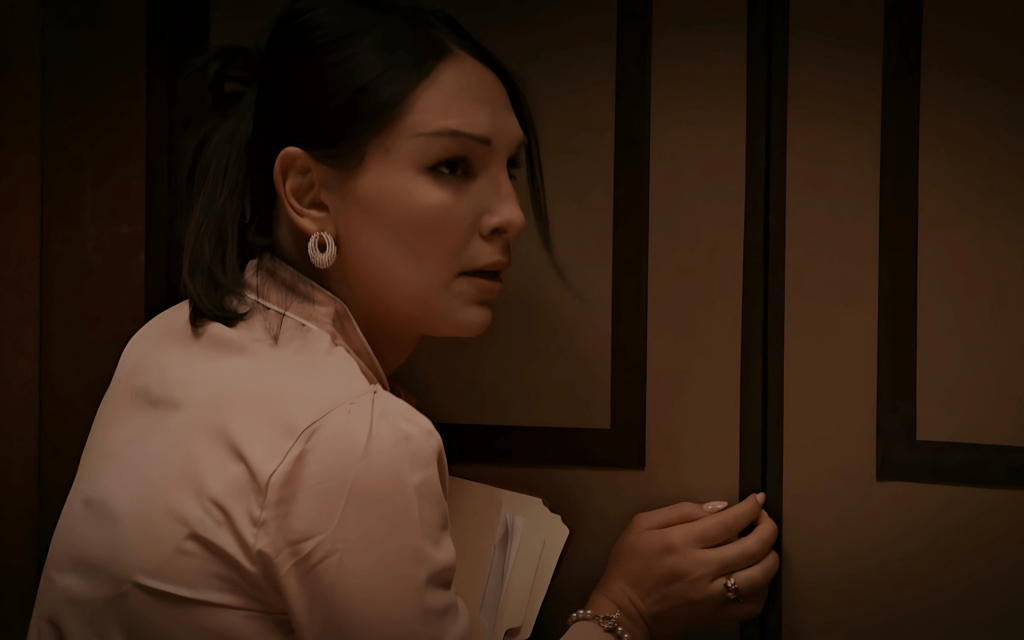
So opens the short film Super Human Anxiety. Screening as part of the Los Angeles International Children’s Film Festival at this year’s WonderCon, the nine-minute movie is a charming venture into anxiety and how to manage it.
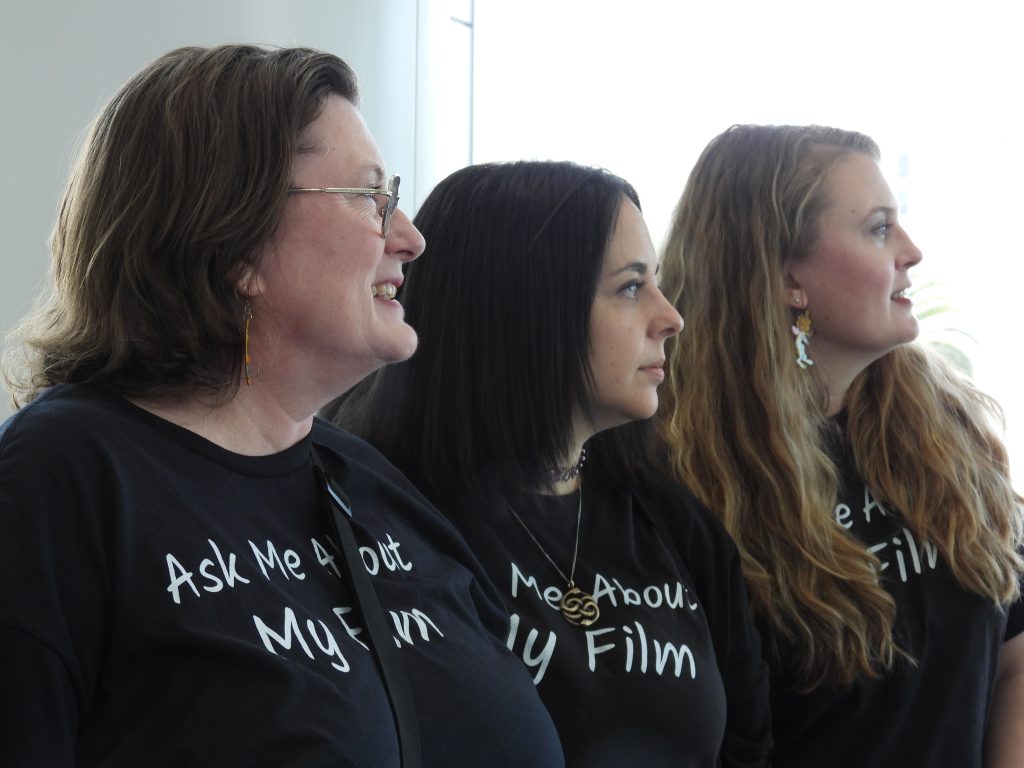
My day job is working with those in the behavioral health industry. As such, the theme of the short film resonated with me. I managed to sit down with writer/director Ashley Maria, producer Melissa Balint, and executive producer Lea-Ann Woodward Berst to talk about it.
I asked Ashley Maria what prompted her to write this story. “What I wanted to do with this film was: I was actually challenging myself to write a single location short film,” she said. “And then, of course, I went a little extreme and made it so that she’s a superhero. It became about anxiety just because that’s something that I’ve dealt with, that I’ve had to understand more about myself over the years.
“When I was writing this character, I decided to make her a high school student. I started to think, ‘How would I hope somebody would talk to me in this kind of situation? What are the wrong things to say, and what are the right things to say?’ Or at least get people thinking about it. So Super Human Anxiety really came out of my own experiences. And then as we were kind of developing the film and realizing that people were really responding to it, we decided to reach out to therapists [and] parents who have kids with anxiety. It became so much bigger than just me after I realized how it could be more helpful.”
Data from the National Survey of Children’s Health study shows that anxiety among children and adolescents aged 3 to 17 increased from 7.1% in 2016 to 9.2% in 2020. I asked about this increase and how it connects to her goals.
“Unfortunately, a lot of kids are dealing with this at a much younger age. It’s more impactful. It’s more hurtful. So, while we’re talking about it more, luckily, I think we need to offer a lot more solutions and how to talk to each other. I know when we’ve had test screenings of it, a lot of parents have looked to their kid and said, ‘Have you seen this kind of thing before?’ They don’t say, ‘Have you gone through this? Have you seen this?’ Because it’s so much easier for a teen to talk about their observations and then gradually start to leak out their own experiences.
“So, for this film, we really want it to engage in conversation and also just kind of make you laugh and have a good time and kind of realize that you’ve just learned a little bit without even knowing. Because I feel like that’s the best way to get teens—and really all of us—talking about this thing called mental health that has been stigmatized for so long.”
I asked how long she had been working on the film. “So, it was a pandemic baby,” she said with a bit of pride in her voice. “It was something I wrote as a challenge when we were all stuck at home. We were actually just releasing our first feature documentary called Pioneers in Skirts, and so definitely at home screening that, and just decided that this would be a really good follow-on to that film, if only because it still has that impact nature.”
She continued, “I have not made a short film in so long because I was working in the doc space for so long, and that’s how I met Melissa [Balint]. Melissa is in Alliance of Women Directors (AWD) with me. She’s also a director and a producer. I just said, ‘I need a teammate. I need somebody who’s going to help me work through this.’ [I] came from the narrative space, came from horror, came from comedy—saw how I was treated as a woman in this industry, started making a documentary about it. Did very well: nominated for an Emmy. It screened all over the world.
“But now I’m like, ‘I gotta start pursuing that again’. And I just needed somebody who was gonna be, ‘All right, Ashley, let’s do it.’ And that’s Melissa. And then Lea-Ann over here is also my mom. She and I were making Pioneers in Skirts together, and when I said I wanted to do another impact project, she said, ‘Okay, here we go again.’ I guess it’s 2023 we really started moving quickly.”
I asked her why she went with a short film, and whether there were any plans to turn it into something longer. “When it comes to pursuing this career as a director, there’s this assumption that women have to keep proving themselves,” Ashley Maria said. “I had this documentary that was a feature, and that took many years of my life. I just needed to make something and get it out of my system, really. And so that was a short film. Really just needed to kind of have something that would be my next calling card, and that’s Super Human Anxiety. ‘Will it become more?’ is a great question, because I feel like there’s more to it, but I do have other short films and then working towards the next narrative feature coming up, so I guess stay tuned would be the word.”
Since she brought up working on a feature next, I asked her if there were any differences (beyond the obvious) between doing a short film versus a feature. “It’s just longer,” she said. “You have to have better stamina. I have to be able to do this instead for three days but for thirty days, you know what I mean? It’s still the same kind of team. It’s just maybe some more people, and it’s more money and more time.”
But there is a bit of a difference in terms of focus. “Writing the feature is a little more challenging than writing the short,” she said. “There is a lot more to it. There’s the thing to writing a short film: you are doing a moment in time, and the feature or the series, you’re building out these characters and building much bigger world.”
WonderCon wasn’t the first screening of Super Human Anxiety: that was LA Shorts Fest. Additionally, the film had been screening around the world. But the reason they wanted it at WonderCon’s Los Angeles International Children’s Film Festival in April was because they wanted to offer it up free to anyone during May as part of Mental Health Awareness Month. According to the press kit I received, the film “can also be used as a cinema therapy tool that empowers mental health programs and schools serving teens and young adults with anxiety and their support networks.” I asked her what that actually meant.
“That was in our initial discovery,” Ashley Maria said. “It was during our research and during our test screenings that somebody said, ‘You know that this is a thing: cinema therapy tools.’ So, we did lots of research on what that actually means. That means that you watch the film and you talk about it. And so we created handouts—different types of documents that will give you verbiage on how to speak to somebody who has anxiety, how to notice when the anxiety is coming about, what not to say.
“So when we say cinema therapy tool, we mean a film that is meant to be discussed afterwards and just have a conversation. Maybe a parent is there or a teacher or a therapist, somebody who is there to engage the viewer, so you’re not just left alone. We get you ready to talk. Let’s give you something as a tool in order to talk about it. That’s really what it’s about.”
So what does Ashley Maria hope that audiences will walk away with after seeing the film? “I think my goal as a filmmaker in general is that somebody watches one of my movies, realizes that they’re not alone, and that other people feel the same way,” she said. “So, for Super Human Anxiety, you are not the only one who has anxiety in this space, and you can make it your superpower.
“For me, if anxiety becomes too much, then I have to really work myself down. But other times, it’s definitely my superpower. I’m super prepared. I’m ready to go and I have all the tough conversations with people, because I want to make sure that we’re all on the same page. I use my anxiety now as a superpower, because I’ve taken the time to understand it and understand how I respond to certain situations. So, if anybody were to take away anything, it would be you’re not alone, and it’s your superpower.”
Since Ashley Maria was both the writer and the director, I asked her if she found it difficult to let the project go. “I don’t know what you’re talking about,” she answered with a laugh. “I was probably way more involved. I was also a producer on the project: that’s kind of my natural personality, too. The good news about being the writer/director is I knew exactly what each moment was supposed to look like. So I knew how it was going to edit together. I knew exactly what I needed in each spot. You bring on a team that trusts your vision and you trust their ideas. You welcome these ideas as the writer/director, though. It’s helpful to have other outside voices say, ‘That doesn’t actually make sense.’ It’s very helpful to have your team.”
So with this film being about mental health, I had to ask my regular question to creatives of how she keeps things fresh and stays away from burnout. “Well, I think you have to have friends around you that are in the same space that kind of remind you that you’re not crazy,” she said. “Burnout is real, and you have to kind of fall in love with it again. But it can be really mentally trying and exhausting, because we have to run our own business. We’re not just creatives: we have to run our brand; we have to run our company; we have to be producers on our project; we have to raise money all the time. I think just being able to turn it off sometimes and just be a fan is really important.”
Balint took this moment to chime in. “I think exactly what Ashley was saying about community being so important to mental health and just our lives in general: I think that that is exactly what this film is about. It’s about letting others help. How we came together–through the Alliance of Women Directors–was actually [Ashley Marie] talking about this film and saying, ‘I need help. I have a film about anxiety,’ and me going, ‘I have anxiety. Can I please help with this? Please?’ And we ended up working together so well.
“Everybody has different ways that they need to be talked to and different ways that they deal with it. We have so many problems in a production. Everything is so hard to do, and with everybody with anxiety, the troubles are heightened. But we were like, ‘We’re the most prepared production that ever could exist.’ We have everything covered from every angle. And so it was our superpower. It was also a challenge, you know, because we are losing sleep, but we had each other also to rely on. So, we have these superpowers of anxiety, and we have a community to rely on.”
With Balint and Ashley Maria both on the board of the AWD, I asked if they thought things were better or worse in the industry for women. Balint first made sure to clarify that the AWD is about supporting women and nonbinary directors in the industry, and anyone can join. But, “Is it getting better or worse for these kinds of directors? Yes, the answer is yes,” Balint said. “Where there are avenues in which things are getting better, it seems a lot of the studies and numbers that are coming out are flatlining. There were gains made, and then it’s coming out that nothing has happened since.”
“It’s something I talked about the other day,” Ashley Maria added, “because it has kind of had a backlash unfortunately: the DEI of it all. It’s no longer top of mind. It’s no longer the conversation. And I will say, thanks to making my film Pioneers in Skirts, I know that if we want unconscious biases to become conscious, we have to talk about it. And so now that the dialog has ended, really the numbers are going down. So we are in a tough spot again.
“That’s where that burnout comes out. And we have to go, ‘Okay: I just have to keep making my movies. I just have to keep trying until I can get these opportunities.’ And I think a lot of the time we go outside of our industry in order to get the opportunities.”
Since Berst is Ashley Maria’s mother, I asked her how easy it was for her to stop being a mom and become the producer. “It isn’t easy,” Berst admitted. “I wear two hats, and we try and blend that together—like work-life balance. This is our third film that we’ve made together, but when Super Human Anxiety was made, I had to step back and say, ‘Okay, I need to just focus on activation. No more producer.’ That’s when Melissa came in. She realized I just couldn’t do that anymore. I couldn’t get that close to it.”
She continued, “But activation just came in pretty naturally, because a mom’s job, typically, is to support their baby and the babies that they make. I’m an activation marketer by trade. My background is in Olympic marketing, activation, marketing. I believe in helping my daughter, and then believe in what she’s making, but helping her take the message she’s creating and bring it to life and bring it to people who want to hear it or need to hear it.
“We’re not trying to change people’s minds. It’s really hard to do. There’s groups that do that. But we’re here to activate this, the idea of thinking about it and talking about it. We’re going to leave the hard work, the medical work, to the people who do this for a living, right? And the same with women’s rights. We’re not here to convince people to give everybody a fair shake, right? We’re here to get that conversation about it by showing what it’s like for other people who don’t get a fair shake.”
You can find out more about Super Human Anxiety, including how to book a group showing and downloading a conversation guide, here. See all my WonderCon 2025 coverage here.

Author: Angie Fiedler Sutton
Angie Fiedler Sutton is a writer, podcaster, and all-round fangirl geek. She has been published in Den of Geek, Stage Directions, LA Weekly, The Mary Sue, and others.
She also produces her own podcast, Contents May Vary, where she interviews geeky people about geeky things. You can see all her work (and social media channels) at angiefsutton.com.
Help support independent journalism. Subscribe to our Patreon.
Copyright © The Geekiary
Do not copy our content in whole to other websites. If you are reading this anywhere besides TheGeekiary.com, it has been stolen.Read our
Related posts:
Wednesday Webcomics: "Whale Star: The Gyeongseong Mermaid"
WonderCon 2025 Interview: Composer Ian Arber
A Princess Brushed Aside, An Abandoned Goddess: An Interview with Riana Dorsey, Creator of the Webco...
WonderCon 2025 Interview: Composer/Music Producer Aaron Gilhuis
WebToon Canvas Review: "Everlasting Star of Reflection"
Comic Recommendation: "Délicatesse" by Val Wise