LA Comic Con 2025: Avi Roque and Trans Masculine Representation in Entertainment
On screen representation of minorities has been shown to be important: not only to help broaden the minds of those who may not encounter that minority in real life, but also to help people from those minority groups see themselves in a positive manner.
In fact, to quote the research paper, “Gender and Media Representations: A Review of the Literature on Gender Stereotypes, Objectification and Sexualization” from the National Library of Medicine, “Consistent empirical evidence highlights the importance of media representations as a key part of sociocultural influences that may have consequences on well-being. Despite some notable progress, harmful representations with well-researched links to detrimental effects are still common across a number of different media.”
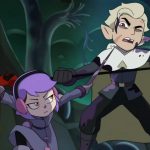
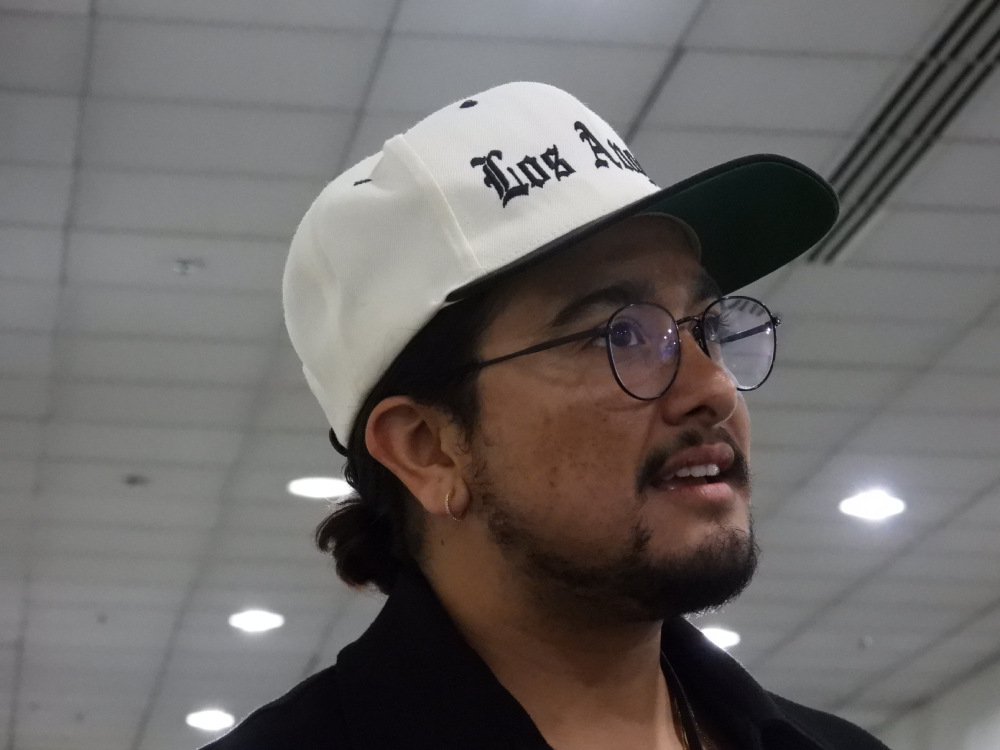
Avi Roque is a self-described Latiné transmasculine nonbinary queer actor. They are a voice-over actor with 60+ books under their belt since 2020—many of which include queer/BIPOC representation in them and have done theatre in the LA area for the last several years. They are probably best known, however, as the voice of Raine Whispers from Disney’s The Owl House—the company’s first nonbinary character in animation.
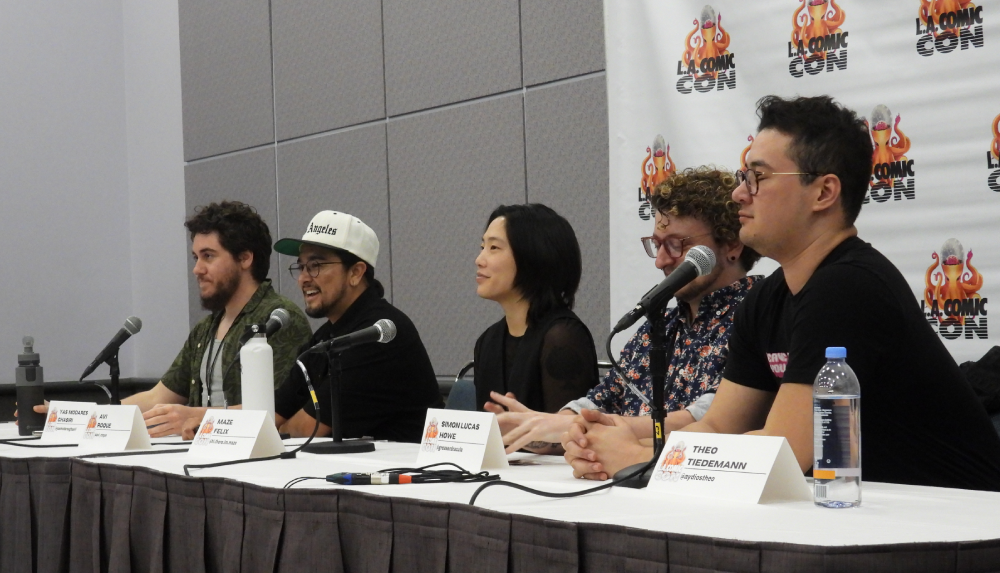
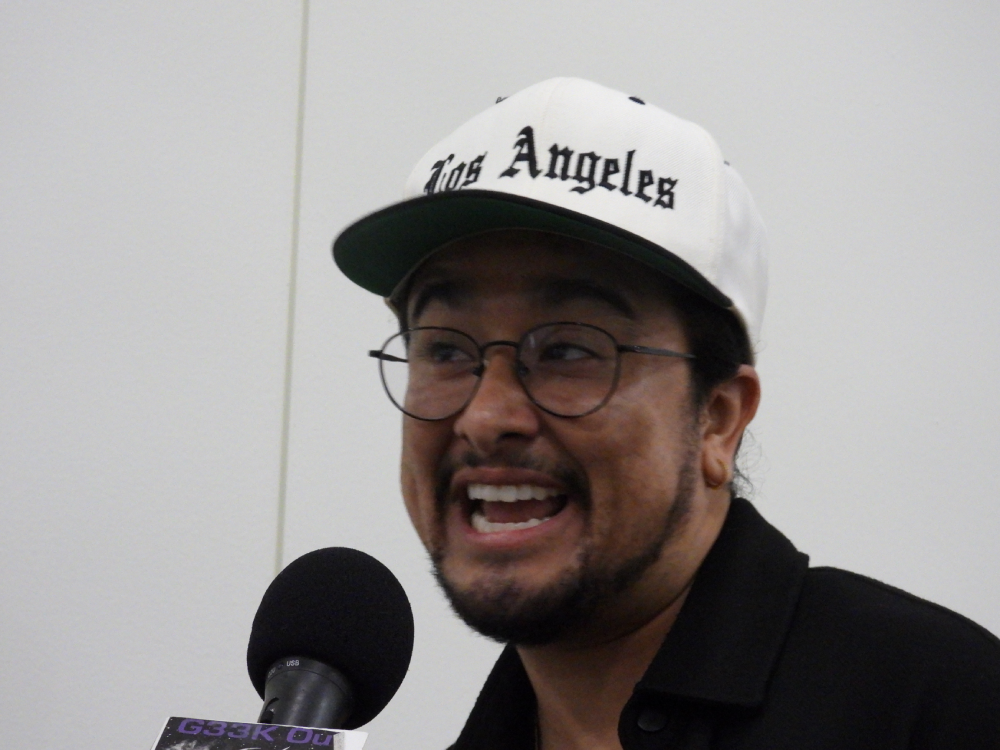
I talked with Roque after the panel “Trans Masculine Representation in Entertainment”.
I first asked them about the ‘double whammy’ of being both queer and Latiné in the current political climate and whether they’ve felt the impact of that on their work. “I think historically, I’ve always felt it because of what I look like for on-camera and theatre. I’ll be honest, sometimes I’m getting typed as the addict, the gang banger, the drunk guy, and I’m like, ‘Okay, I’m more than that.’
I feel like it’s the stereotypes that still exist for Latiné people that I’m still combating. But then on top of that, like you just said, the double whammy of it all: I’m also combating the whole gender issue and just being trans and nonbinary and just trying to exist, period. So, it’s the intersectionalities that I feel still exist as obstacles. However, I am very grateful because there are people who are pushing the boundaries, there are people who are making inclusive work, and I get to be a part of those projects. So, it’s pretty cool.”
As someone who’s been a long-time defender of on-screen representation and has been following the news about the concept, I know there’s a fine line between wanting to represent and not wanting to play only those representative roles. I asked them how they handle that challenge.
“Yes!” Roque said with excitement. “It’s hard because there are still casting directors who are of their own opinions or their own lived experiences that color the lens of how they view things. So sometimes I’m asking for casting directors to have more of an imagination, to think beyond the box of what someone can play or be. So I feel like I’m still beholden to people making decisions.”
They continued, “So I feel for me, it does feel a little heavier percentage-wise of the only roles I audition for are trans or nonbinary. However, I’m noticing now that the industry is picking up again. I’m seeing this like spattering [where] I’m playing a cis character, or audiobooks where I get to voice all genders. So, the work is out there, but I still feel a little bit still like I’m trying to push through people just seeing me beyond just trans.”
I next asked about their process as an actor: how do they approach a role and what do they do to get in the character’s headspace?
“I am a big person about personalizing,” Roque started. “I try to find areas where I can bring my own lived experiences, or find the parallels, or find what’s adjacent to the character’s life versus my life. I always try to find entry points where I feel like I can find empathy. I always want to be on my character’s side, not against my character. So, I really feel that that’s kind of my approach. I just kind of dive in, too. I’m not a big fan of text analysis. Sometimes I just want to already get on my feet and start discovering how the character moves and where they lead from and how they think. So, yeah, my approach is very like, let’s get on my feet. Let’s get physical about it already, start blocking, but also finding the points of entry for me to connect to the character.”
Since Roque does theatre, voice acting, and audiobooks, I asked if they felt like they were using ‘different muscles’, so to speak, while doing the different aspects.
“I feel one thing I always say across the board,” they said, “whatever medium it is, it’s still acting. The foundation is still coming for me from my theater training, but sometimes on camera, it requires you to get a little more refined, smaller. Like you think it, and it comes through the eyes. Voiceover: I actually love getting to be big and physical, and I have the freedom to do that with my voiceover work, which translates to theatre. Theatre: when you have to fill that stage and that audience, you are projecting and you are using your body. And so I feel like yes and no. It’s all still acting.”
Considering the current political landscape, I asked Roque’s thoughts on whether being queer was getting better or worse.
“I always say it’s important to find your people and find your community,” they answered. “I think now more than ever, we need to try to turn towards each other. And it might be challenging with the political landscape and people trying to attack us and say that we’re the villains, but we’re not. We are human beings, and we deserve happiness and we deserve love. So I just think, for me, I feel like my gender identity was something that I noticed as a kid, but I didn’t know how to articulate it, and so that got swept under the rug.
My queerness showed up first, my sexuality, and that was in high school. I had my first girlfriend, but I was still very closeted and ashamed, and it was really challenging to navigate that: being a teen and being queer. And then in my mid 20s is when I transitioned, because the gender identity came back. I was like, ‘Wait, I can be nonbinary, I can be trans. I can change my pronouns, I can change my name.’ And that’s when I transitioned and made decisions for myself to truly feel good about myself.”
Whenever I meet someone who does multiple mediums, I ask if they have a favorite or if they prefer the variety. “I think I like the variety,” Roque responded to the question. “I love theatre. But for me now, where I’m at in my life, it’s a big sacrifice, because it’s a lot of time and not always a lot of money doing theatre. But I love voiceover and voice acting, because I feel like I get to bring my theatre self into the studio. [With] audiobooks, they’re just gorgeous because I’m narrating books that feature trans characters or like Latiné characters—books that I wish I had growing up. I think that’s my trifecta right now.”
I next asked if they had a proverbial white whale of a role they’d like to play eventually. “Man, I know sometimes this is simple and boring, so I kind of have two answers,” Roque said. “One is literally just to be a regular old person who’s trans and nonbinary and they’re existing. It’s a slice-of-life, kind of animated-like series, and we get to see essentially me living my life and having adventures. But also, I’m curious to play like a villain. Like I want to be one of those iconic Disney villains, you know, like Jafar or Ursula: that just seems kind of cool.”
So, what advice would they give to others who may be in the same boat in terms of either identity or career?
“I think from my experience, when opportunities started pouring into my life was when I finally was in my authentic self and my authentic truth and I was living openly and freely,” Roque said. “So, I feel like you kind of have to find your sense of self first and be confident in that and then start to navigate this industry and acting world. If you want to be a voice actor, I say watch things, listen to things. If you want to be a narrator, take classes and workshops. There is still work that you still need to put in, but there’s no formula. I always say that there’s no ‘do this, this and this, and you’ll get this.’ Just find where you can learn, find where you can explore and discover, and just keep going for it. If it’s what you want to do, you’ll figure it out.”
When researching them, I found out that Roque started as a visual artist first. I asked if they still did that at all. “I don’t,” they said. “I’m sad about that, because I feel like it was such a comfort thing for me as a kid to just doodle and draw and get lost in that medium. So now I’ve lost touch with that. But I will say one of my other dream things to do is to make my own short animated film, and I do want to maybe work on character designs, but work with artists that have more experience.”
One of the other things Roque does is maintain a Substack newsletter called Multitudes. I asked them to give me a basic rundown of what that was about and why people should subscribe. “It’s my personal Substack. I’m talking about my life and really my journey to where I am today and a lot of things on mental health.”
I asked for them to elaborate. “There was something that happened to me when I was living in Chicago, and essentially I was named and put out there on social media platforms,” Roque said. “Essentially, I did take that as an opportunity to look deeper within myself and say, ‘Hey, wait a second. What is going on?’ And ‘How am I affecting other people?’ And so I feel like that started this full year of me just writing and trying to figure out and going back to the beginning and seeing how I have been shaped and the coping mechanisms I’ve developed all for survival. So that’s really what my Substack is. I release little bits of my writing, and then I narrate it so I have an audio component as well.”
At the panel, Yas Modares Ghasiri and Roque announced that they were working on a podcast together, In Full View, with the first episode hitting September 25. I asked Roque to give me more information. “It’s a brand-new podcast where we’ll be interviewing trans masculine creatives in media—whether that’s books, music, actors, producers, casting directors—and we just want to share their stories and highlight their work and just keep having these important conversations of the importance of representation. I always say representation is life-saving and life-changing.”
If you want more information about Avi Roque, they have a LinkTree with their website, socials, and a link to the Substack. If you want more information about In Full View, it, too, has a LinkTree.
See all my LA Comic Con 2025 coverage here, and see my highlight reel from the con on the Geekiary’s YouTube.

Author: Angie Fiedler Sutton
Angie Fiedler Sutton is a writer, podcaster, and all-round fangirl geek. She has been published in Den of Geek, Stage Directions, LA Weekly, The Mary Sue, and others. She also produces her own podcast, Contents May Vary, where she interviews geeky people about geeky things. You can see all her work (and social media channels) at angiefsutton.com.Help support independent journalism. Subscribe to our Patreon.
Copyright © The Geekiary
Do not copy our content in whole to other websites. If you are reading this anywhere besides TheGeekiary.com, it has been stolen.Read our