
WonderCon 2025 Interview: Composer/Music Producer Aaron Gilhuis
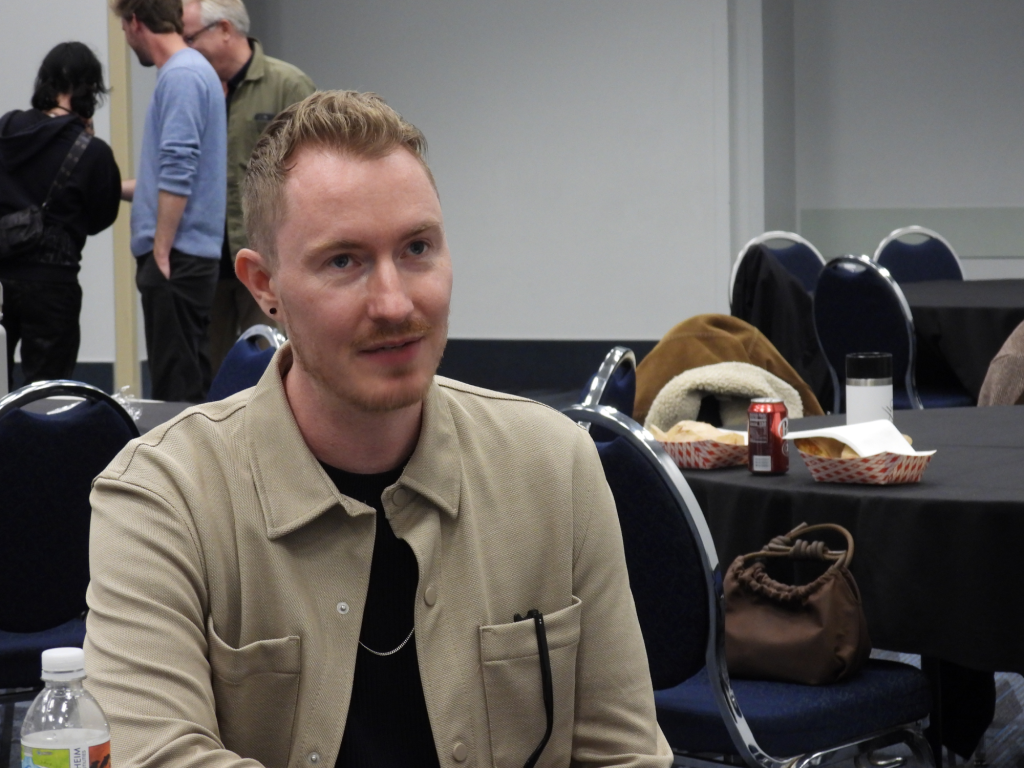
To be a composer for Hollywood, you have to be able to do it all. Composer/music producer Aaron Gilhuis was one of the panelists from Impact24’s panel “3rd Annual Scene Breakdown: Behind the Camera of Film and TV Shows” at the 2025 WonderCon. I talked to him after the panel about writing for different mediums, genres, and project sizes.
I started by asking him whether writing for one medium was different from writing for another. “Every project is always different, and your workflow and your notes and the way you do things: I can never seem to nail it down to one single way to do it,” he said. “It always changes every project. In TV, the deadlines are tighter. There’s more music to be written over the course of the season. Movies: depending on the deadline. It could be six weeks; it could be six months. You never know what you’re going to get. You might get a re-edit at the very end and have to adjust. Everything is in flux, and everything is changing. So there’s never one way to do it.”
What does he enjoy about the process the most? “The easiest part is once you have your theme written, Gilhuis said with a smile. “When you’re on that blank page, that’s the daunting part and the part where you feel like you’re you can’t do your job and you have imposter syndrome. And then, when you have something written, that main theme becomes the basis of everything you write. It’s the foundation of what you’re writing going forward. So, once you have that down and you have a good template and you have a good understanding of how that theme can evolve and change and meet different moods, then it’s easier, because you know what you’re pulling from for every scene.”
I then asked a variation on that first question. Professional composers obviously have to do a lot of different styles and genres. Does he have one he favors? “Being someone in this industry for a little bit, you get introduced to a lot of different needs,” Gilhuis began. “You have to be kind of a Swiss Army knife: you have to be able to do big band jazz, and you have to be able to do blues, and you have to be able to do classical, and you have to be able to do rom coms, and you just have to learn how to do it. I tend to gravitate towards more experimental in a sense of hands-on production. I play a lot of different instruments and I have a collection, and getting on outboard synths and pedals and getting my hands on things is kind of something that’s followed me for most of my projects. And so I tend to get picked for projects that need things like that.”
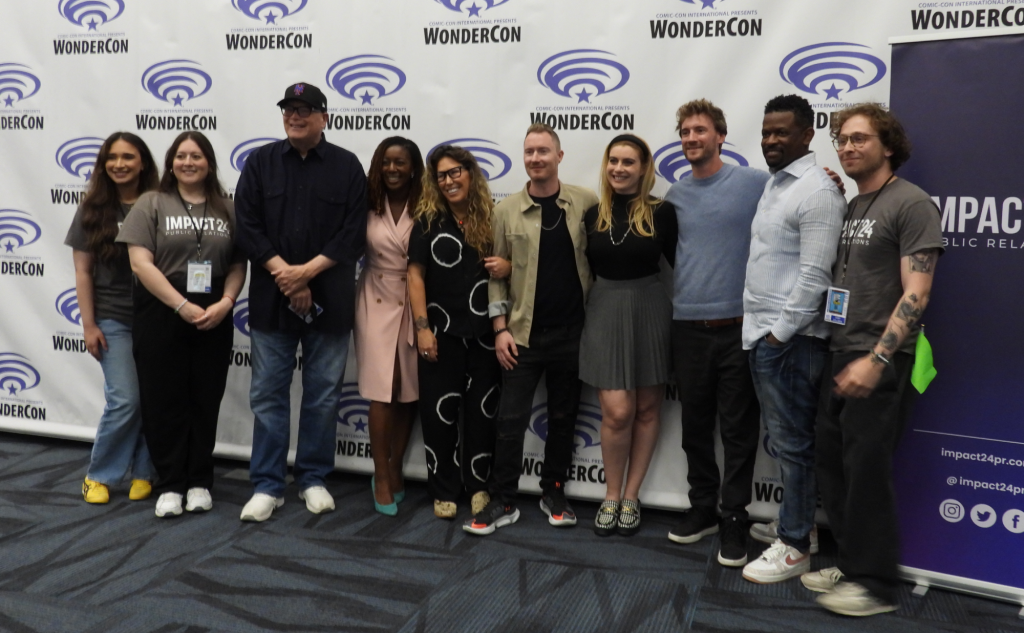
His bio mentioned that he was a ‘multi-instrumentalist’. I asked him what instruments draw him. “Anything that I can get my hands on, I’ll figure out how to work,” he said. “I’m never going to impress anyone with a single instrument. I’m never going to blow anybody away. But if I can collect them and I can get something out of it and I can blend it into the score somehow…. I have been playing cello for a few years, but I would never call myself a cellist, because I can play it well enough for what I want and do it for a raw emotion, so it’s not in the, in the box can sound. It’s raw and it’s not perfect and it adds that texture and realism to the score that I find that samples can’t always achieve. So, anything I can get my hands on and work into the score, in some ways, I find valuable.”
I next asked him if there was any difference between writing something for a larger project versus a smaller one. “When you do record a live orchestra and you compare it to your mockup of samples, I noticed that it’s much more three-dimensional,” he said. “It kind of surrounds you in a way that’s hard to achieve with samples. I feel like the average person would not be able to tell. Now the samples are so good, they wouldn’t be able to tell unless they heard a side-by-side comparison of the exact same piece of music. And then they can kind of infer of, ‘Okay, you can hear the room. You can hear the players move. You can hear the space between the instruments, the room itself.’”
As always, I was interested in what he did to keep the work fresh and to avoid burnout. “Composers specifically, especially if we’re writing all of our scores on a piano—whether that piano is controlling strings or actual pianos or woodwinds—we have certain movements that we make that are muscle memory,” Gilhuis began. “We have certain ways that we approach scoring and certain things that are intrinsic in us that we’ve learned to go to. So, you’ll hear a composer’s sound, because that’s how they move across the keyboard. If you can get away from that? I find writing a cello part on my actual cello so much more freeing and inspiring, and things that I would never do on the keyboard. Even if I go back and replace it with samples, I now have written a new idea. So, getting away from the keyboard, I find keeps it fresh. Playing something on guitar that you might transpose to another instrument or on a synth that is outside of your computer and getting your hands on something and turning the knobs: it keeps it fresh. And you discover new things all the time.”
I asked him what about his music is unique to him. “I’ve used a lot of different fret-based instruments in my score,” Gilhuis said. “Guitars, mandolins, banjos, electric guitars: I have a whole collection. That seems to be something that is recurring for me, that I tend to get picked for those projects. It seems to be something that is kind of cultivating in my career and is being continually kind of added to my repertoire. I keep getting picked for things like that, and I really enjoy it.”
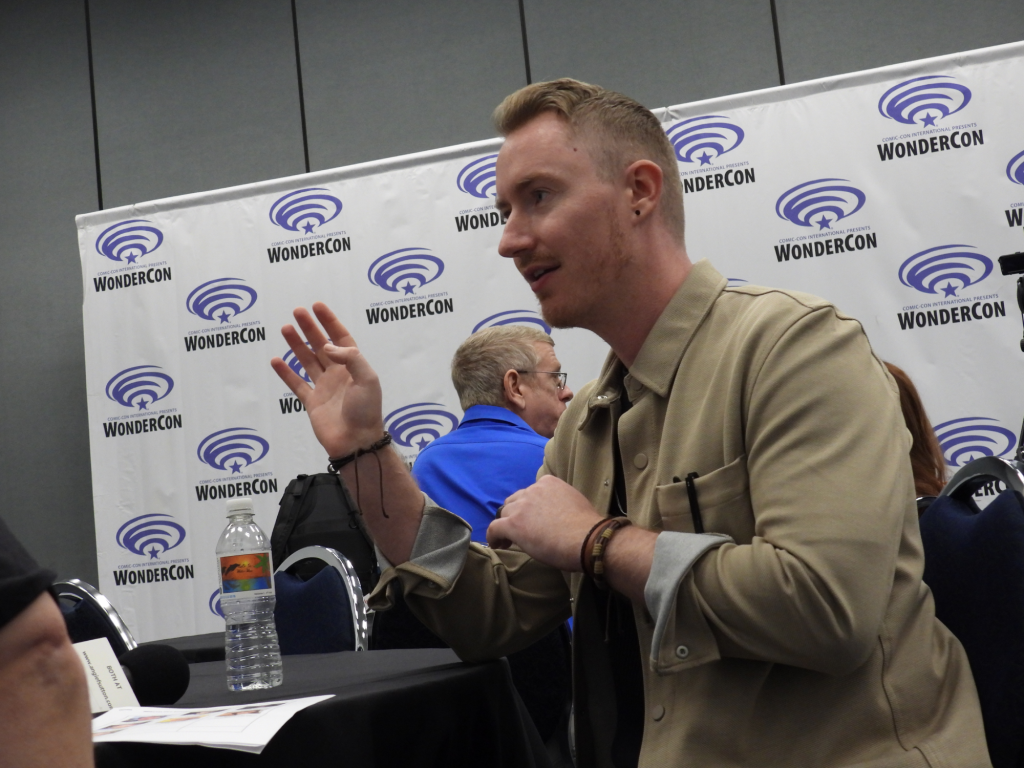
When talking to people who do art for a living, I love asking for the story of when it finally hit them that they were good at it, that they could make a career out of it. What was that moment for Gilhuis? “Honestly, I’ve never been good at like anything,” he said with a chuckle. “I’m not good at school, I was not good at sports, not good at art, but music is something that I think I really just fell in love with. The first thing I got competitive with. I wanted to be better and I wanted to be good at it, and it kind of just flowed from there. I always loved film and storytelling, and I always liked writing string parts for the songs I was writing. I always thought it would be cool to write music for movies, but I didn’t really know what it meant yet. I remember that there was a specific day that I discovered there is a job called composer and that is what they do. And it’s like a light switch went off, and that’s that was my whole focus switched. That is what I’m doing, and nothing is going to stop me, essentially. And so everything I did before that was now focused on this.”
At the time of the panel, Gilhuis was promoting being the composer for the movie Queen of the Ring. I asked him what made writing for a sports movie different than writing for a drama or a comedy. “I wouldn’t say you do something differently,” he began. “It’s really all about the character’s journey and the story. You really want to find that character arc. You want to define the character’s world. So being a sports biopic or a drama, you’re still doing the same thing by finding the musical world and telling the story musically. You really want to identify the character, the point of view, the world, the tone, and the character traits you want to express through music. So, it’s not completely different than other genres. That’s what I try to do on every project.”
I asked him how he builds a world musically. “You have to define the tone and texture of the world.” Gilhuis said. “You spend a ton of time experimenting to see, ‘What does this world sound like through this character?’ So you have a lead character and you have their point of view. How can you translate that musically? You’re setting the tone going forward as to what the audience can expect to feel like in this world. In screenwriting, you have to set the world, you have to be descriptive, and you have to show them what this movie is like almost right away. And it’s very similar in composing, where you have to set the tone for the music. Music can tell you quite a bit about the project. Even before I write a melody, what is the world sound like? What textures are we using? What template are we using? What instrumentation, what arrangement, what’s the feel, what’s the rhythm, what’s the tempo? It kind of all goes into that.”
You can find out more information about Aaron Gilhuis at his website. Additionally, you can watch the full WonderCon panel on Impact24’s YouTube channel. See all my WonderCon 2025 coverage here, and see all my photos from the con on my Flickr.

Author: Angie Fiedler Sutton
Angie Fiedler Sutton is a writer, podcaster, and all-round fangirl geek. She has been published in Den of Geek, Stage Directions, LA Weekly, The Mary Sue, and others. She also produces her own podcast, Contents May Vary, where she interviews geeky people about geeky things. You can see all her work (and social media channels) at angiefsutton.com.Help support independent journalism. Subscribe to our Patreon.
Copyright © The Geekiary
Do not copy our content in whole to other websites. If you are reading this anywhere besides TheGeekiary.com, it has been stolen.Read our
Related posts:
LA Comic Con 2024 Interview: Sound Editor/Mixer John Chalfant
LA Comic Con 2025: Twenty-Sided Tavern Panel and David Carpenter - Interview

WonderCon 2025 Interview: Legion M’s "Fade to Black"
A Sparkling Gem All Can Enjoy: The Uniqueness of "City of Ghosts"
"Ollie & Scoops": An Enthralling Fantasy-Adventure Series
Talking with the Cast (and Crew) of Percy Jackson