
WonderCon 2025 Interview: Composer Ian Arber
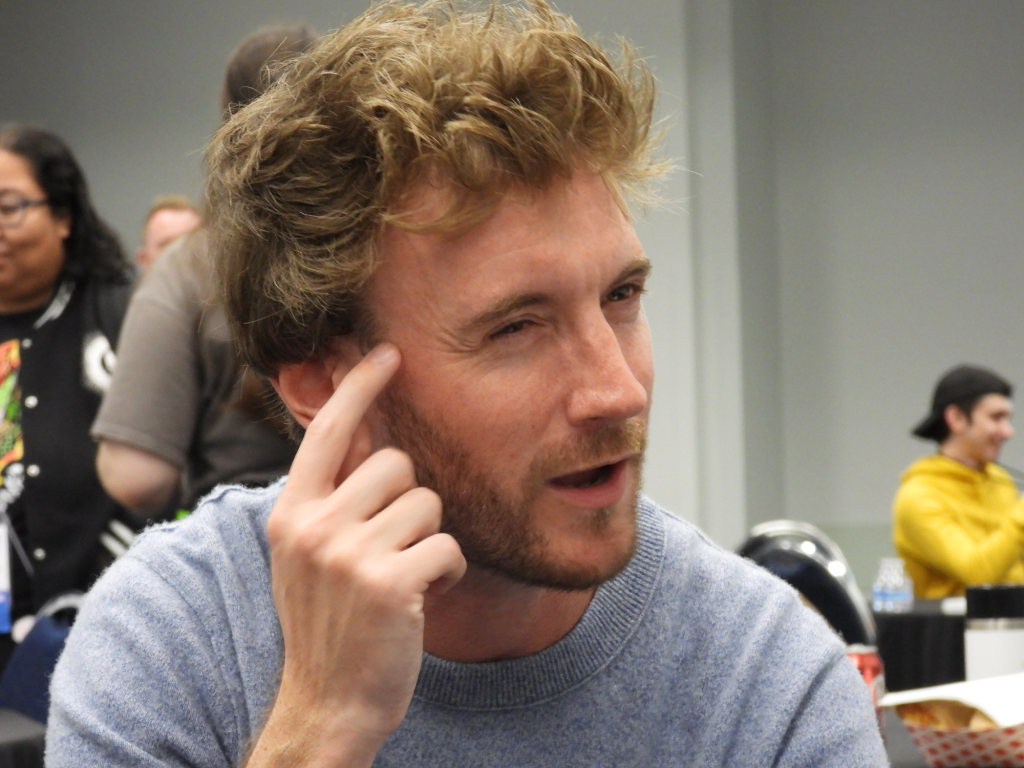
Ian Arber is a London-based composer who has been working in television and film for about ten years now. He was at WonderCon as part of Impact24’s panel “3rd Annual Scene Breakdown: Behind the Camera of Film and TV Shows”. Afterwards, I got to talk to him about his process and career.
Arber has been composing professionally for about twenty years now. So I asked him what his favorite part of composing was. “Probably getting to the live musicians at the end, which probably most composers will tell you,” he said. “I think it’s partly a culmination of all the work you’ve done to get to that point, and also just having 30, 40, 50 people sitting there playing their instruments to the music you wrote. That’s by far the best moment for me.
Of course, I had to ask the opposite of his least favorite part. “The business side can be a bit tricky, but the blank page at the start of projects is quite scary. I wouldn’t say ‘I don’t like it’ because I’m quite excited about it, but it’s the most scary.”
Arber has worked in a wide range of genres, from sports, comedy, courtroom drama, documentary, fantasy/science fiction, to action. I asked him what it was like doing different styles. “Different composers handle this in different ways,” he said, “but for me it’s very much coming up with kind of a concept for each project. It could be a completely different genre, it could be the same genre movie: the concept could be different. So, it’s all about the concept.”
He went on. “So, if it’s Wolf Man or if it’s Paris had Fallen, there are certain constraints or ideas that I have. You know, if it’s a horror, I know, palette-wise I want to make people feel uncomfortable. So maybe I could try some of these instruments out. So, it’s basically from ground up. At the start of the project, you’re creating kind of a bespoke palette of instruments, palette of colors and tones, and coming up with your own concepts to make it original and unique.”
It being Hollywood, I was curious how much of the project he typically gets to see before he starts composing. “[With] Paris Has Fallen, getting the script. So we’re working to start Apollo Has Fallen, which is the next of the Has Fallen series. We have the scripts and we actually have the storyboards and they took us to set.”
He continued. “They’re doing these things to give us ideas so we can start to kind of come up with some suites or some musical ideas away from the picture. And then after they shoot, they start sending us what you call assembly. Straight from a week of shooting on set, they’ll send us a bunch of videos that kind of give us an idea for the characters.
“So, it does depend on project by project. Some projects: you’ll get a locked final film or episode, they’ll send it to you and then say you’ve got three weeks, and you work from there. But the first stage of the whole process is you sit down with the directors and you go through scene by scene. You work out where the music starts, where the music stops, what kind of music he or she wants in that moment. We have to watch it all the way through, no matter what.”
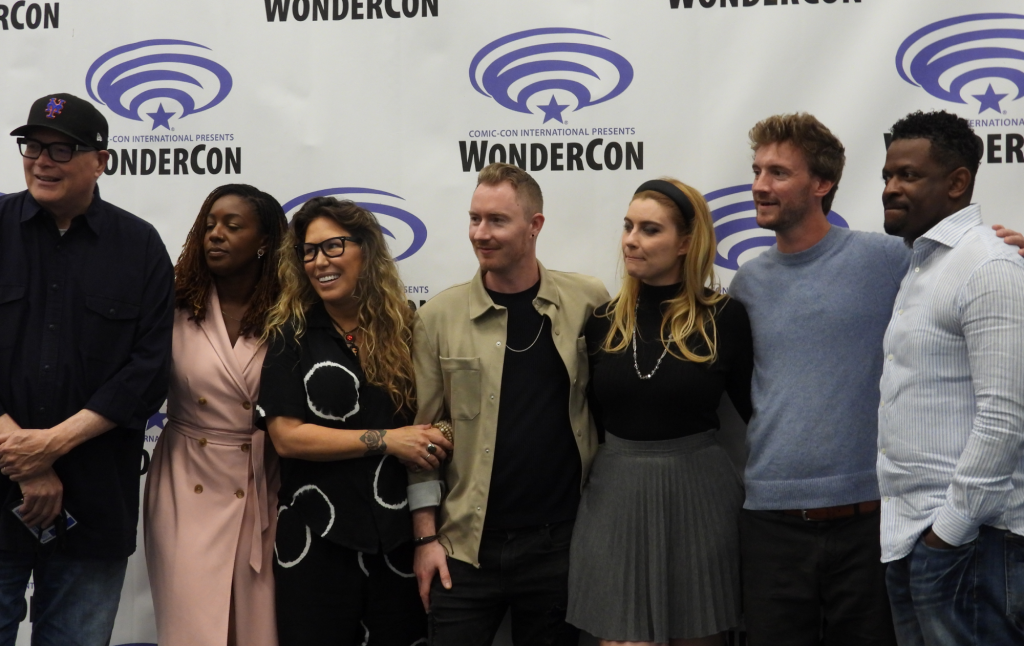
Like with any creative project, everyone has a certain style. I asked him what made his music ‘his’. “I’m more classically trained,” he began, “but these days, I use a lot more electronics. And the way I use electronics isn’t necessarily like I think a lot of electronic composers use them. I kind of treat them more as an orchestra and treat them as colors, and I also like to create electronic sounds from organic elements. I’m a cello player, so like some of my synth sounds in Paris Has Fallen someone would guess that there was a synth used in a hand cinema score, but it was actually my cello being distorted and manipulated to get there.”
One aspect of his bio that fascinated me was that it stated he is a “collector of exotic instruments.” I had to ask him for more information on that. “Basically, whatever country I go to, I bring an instrument back. That’s usually my rule, and it’s hard to bring big instruments back. Like recently, I went to Santa Barbara and stopped, I always stop at those little stalls that sell really old things, like an antique store. They had a beautiful native drum, which sounded incredible. And they had this—I don’t even know what it is, I’ve been looking it up–it’s like a mini kora, what we’d call it. It’s a strummed African instrument, but as a small version. So I just bought both of those and added them to the collection. I’ve done that over like 15 years. In London, I’ve got loads of those kind of things. In LA, I’ve got less when I moved: it’s hard to bring them over. I just try to buy something I haven’t seen before in every country I go to.”
This led the conversation of the use of technology in music, both in terms of genre like electronica as well as using it to create the actual music. I asked him what that was like in today’s music world. “I think where we’re at in the industry at the moment is they have to be combined,” Arber said. “You don’t really hear many scores that come out anymore that are just orchestra, just like John Williams orchestra. There’s always a hybrid these days. I think that they’re marrying very well, electronics and string elements, and that’s the thing that I’ve just always loved. I’ve never wanted to do just an electric score. I wouldn’t mind doing just a classical score, but I love the idea of bringing them together and doing it in a unique way and making them work together. It can be a bit of a fight. But yeah, these days, especially in television and movies, you have to have a hybrid palette.”
As always, when I talk to creative people, I ask what he does to keep the work fresh and fun, avoiding burnout. “The burnt-out thing is definitely the trickiest of all of that,” he said. “I have relationships with quite a few production companies and I work in quite a few different mediums in the industry—like documentary television, film in the UK, US. I’m very lucky. The last few years, I’ve always had something going on, and I’ve often been very different styled things. That’s a very easy and easy way to jump between completely different genres and keep it fresh.”
He continued, “If you get a bit of writer’s block on one thing, you just go to the other thing. So keeping it fresh is easy for me, because I don’t want to just write some music that works in any movie. I want to write music that’s specific for that movie or specific for that series. Every time I start a new project: for me, it’s a complete clean slate. And in terms of the writer’s block thing, I’ve not had it for a long time because I think I have like a toolkit. I’ve just done so many series and films over the last 15 years that I just feel like I’ve always got a way in. I mean, it’s scary, but I know, like, ‘Okay, well, it’s this genre. I’m going to start with these ideas,’ and that’ll get me going. And then once the ball is rolling, it just gets bigger and bigger.”
I mentioned that as a creative myself, sometimes I set aside something I’m working on to give it some perspective and asked if he did something similar. “Yeah,” he said. “Sometimes we may be writing a script that doesn’t get picked up. We might write a demo for a TV show or a film, and sometimes they ask you to actually write for the demoing process. And more often than not, probably one out of ten of those are hits. Nine are misses. So always recycle those. Sometimes I write a theme for a show that they don’t really like, and I’m like, ‘I love that,’ so I want to find another chance to use that. And some point over the next few years, you find an opportunity to use it. So definitely putting it in a little folder, or sometimes you remember that little melody, or that little idea that you wrote: I’m going to bring that back, and it might be in a different context, but you might go, ’Oh, I can bring that end of the world idea of that character in this comedy. They’re always rattling around our heads, right?”
With the rise of technology on the creation side of things, I was curious as to how he actually composed. Did he use a computer? Write it by hand? A combination? “All on computer. I sometimes run the cello, but yeah, mainly in the piano.”
He continued, “The one chance I got to write by hand was—there’s a classical music festival in the UK called the BBC Proms. I was basically like a tea boy. I don’t know what year that would have been, 2009 maybe? I was like an assistant on the show. And the lady who hired me followed my career for I think it was nine years, and eventually she got the contract to do the Proms. So, she called me up and said, ‘Do you want to be the first ever composer to be commissioned to write the theme?’ And I thought that would be an amazing opportunity to do hand paper. So that’s the only time I’ve ever managed to do it, and it’s very scary. But that whole theme was written basically as a sketch with my hands, and then I go to the computer and finish it.”
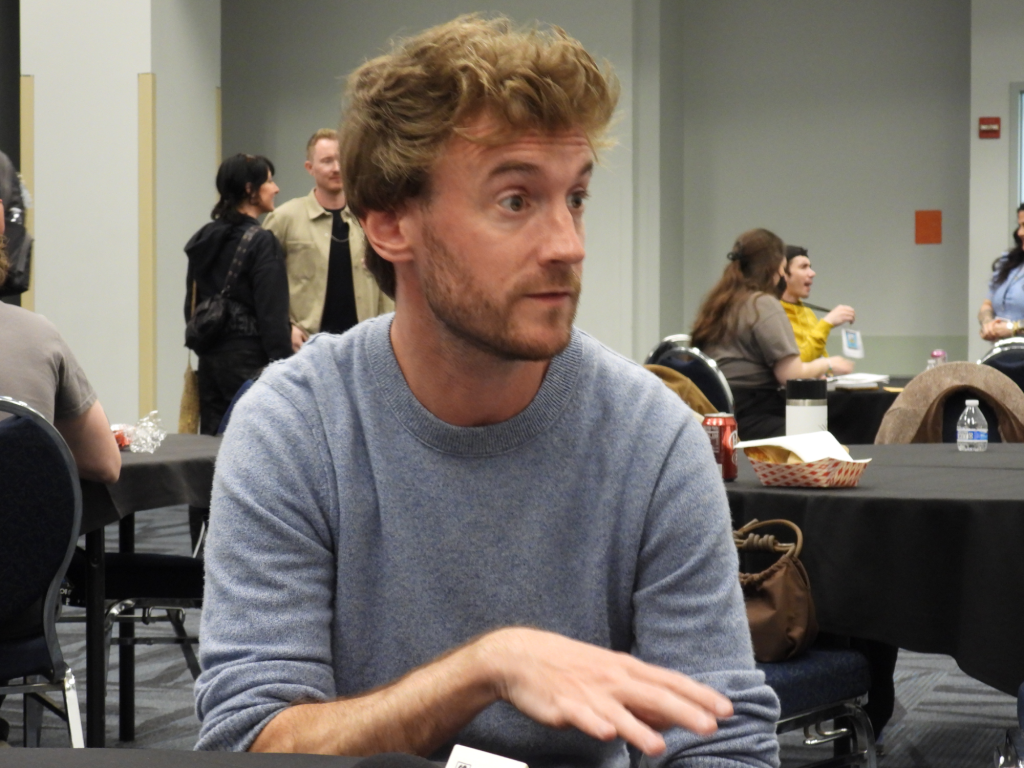
Since it IS Hollywood, I asked how much influence he has on what the music sounds like. In other words, how much input does he take from the director or writer or producer? “Perhaps that differs where you are in your career but also in your collaboration with the people you’re working with,” he said. “Maybe working on a studio movie in the US, there’s quite a lot of producers for it to sound a certain way, but I think it’s important that we as creators are very firm in what our voice is and what we think is right. And if there’s not good chemistry between everyone, there’s no point. I’m not that interested in working in something where they’re just going to tell me what to do and not like what I’m doing. People should hire us to bring our voice and do our thing. So, I would say, like 99% of the time, almost always, it’s a really productive creative conversation.”
Is there something he’s always wanted to do and hasn’t gotten to yet? “I’ve written many demos, so I’ve got them all in my drawer waiting,” he said. “I’d love to do a period drama movie like Little Women. Something where I can really flesh out really melodic melodies using an orchestra. I’m sure I’ll get a chance one day, but those are quite limited. To be honest, a dream project would be to do a big superhero movie. I mean, I would love the opportunity to show what I could do with a Marvel or a DC movie or like a period drama, yeah?”
Of course, the music industry—like so many others—is in a constant state of flux. Streaming (both of music and of television and film) upended the industry and royalties are becoming smaller and smaller. I asked his thoughts on this topic. “I mean, there’s definitely complications,” he said. “I think some composers, maybe five or ten years before me, saw a big change: because they were there through composers keeping all of the rights and the royalties to their music and shows going on TV and being shown like 15 times, as opposed to these days being shown once and going on a streamer.”
He continued, “My career grew up in the industry where kind of Netflix was already abound. I feel like I’m used to needing to hustle quite a lot on many projects, whereas I think maybe composers back in the ’90s probably could do one or two projects. We have to do five or six these days. It’s just what I’m used to. So, I haven’t really seen a massive difference for me: it’s always been about just working on as many things as possible, working with great people, and just keeping them busy.”
Of course, a big issue these days is the rise of AI in creative spaces. “The AI thing is tricky for sure for lots of people in certain parts of the industry,” Arber said. “For me, I’m not too worried about that because the biggest part of my job is a conversation and a film-making collaboration. Secondly to that, it’s about the idea that we’ve come up with and how my voice approaches this original music for the film. So perhaps AI will maybe come in as a useful tool in some way in that process. But I don’t think it’s ever going to replace a composer on a high-budget movie. But it’s going to cause havoc for lots of drop-in composers who have really good careers writing music for libraries or for adverts where companies might potentially start using AI.”
At the time of this interview, Arber was getting ready to record the orchestra for a Ken Jeong comedy drama called Tiger Mom as well as the music for the third series of The Capture for the BBC. And, of course, Apollo Has Fallen is also in his plans.
You can find out more about Ian Arber and listen to some of his work on his website. You can view the full WonderCon panel on Impact24’s YouTube channel. See all my WonderCon 2025 coverage here, and see all my photos from the con on my Flickr.

Author: Angie Fiedler Sutton
Angie Fiedler Sutton is a writer, podcaster, and all-round fangirl geek. She has been published in Den of Geek, Stage Directions, LA Weekly, The Mary Sue, and others. She also produces her own podcast, Contents May Vary, where she interviews geeky people about geeky things. You can see all her work (and social media channels) at angiefsutton.com.Help support independent journalism. Subscribe to our Patreon.
Copyright © The Geekiary
Do not copy our content in whole to other websites. If you are reading this anywhere besides TheGeekiary.com, it has been stolen.Read our
Related posts:
HEY YOU GUYS! The Goonies Original Motion Picture Score to be Released on Vinyl
Three Music Podcasts You Should Be Listening To In 2019

"Helluva Boss": An Indie Animation With Morbid Humor
Like Card Games? Meet The Sound Cypher! - Interview

WonderCon 2025 Interview: Legion M’s "Fade to Black"
WonderCon 2025 Interview: Artist Randal "R.K." Milholland